Rubber Shingle Installation
American Shingle Co. connects homeowners nationwide with licensed and insured roofing specialists dedicated to precision rubber shingle installation. Our partner network provides prompt local coordination with typical contractor response times of 30 to 90 minutes — delivering code-compliant installation, expert deck and ventilation integration, and manufacturer-backed warranties.
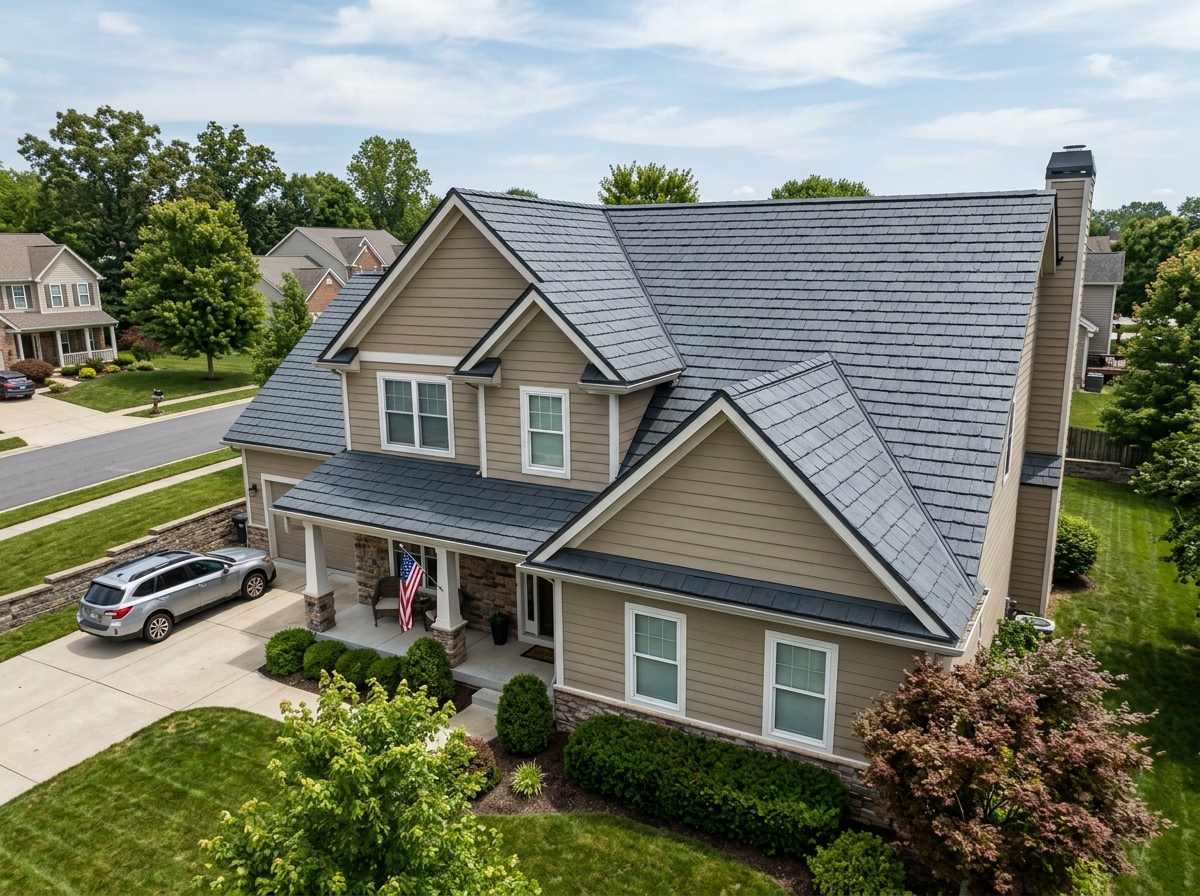
Understanding Rubber Shingle Installation & Replacement
When planning a steep-slope residential roofing project, rubber shingle installation encompasses both new construction installation and the complete tear-off and replacement of aging, weathered shingles down to the structural roof decking.
Our nationwide contractor referral network connects property owners with independent, verified roofing professionals who specialize in rubber systems. From architectural layout and proper ventilation integration to code-compliant fastening patterns, every project is executed to deliver optimal weatherproofing and aesthetic curb appeal.
The 5-Step Professional Installation Process
A certified residential installation follows a rigorous engineering sequence to protect your home's building envelope:
- Complete Tear-Off & Deck Inspection: Removal of all existing roofing layers down to bare plywood or OSB sheathing. Damaged, delaminated, or rotted decking boards are replaced with new APA-rated sheathing.
- Eaves & Valley Water Barrier Installation: Application of self-adhering ice-and-water membranes along critical leak zones, including eaves, valleys, rakes, and chimney saddles.
- Synthetic Underlayment & Metal Drip Edge: High-tear-strength synthetic underlayment is rolled horizontally across the entire deck, complemented by corrosion-resistant metal drip edge installed along all perimeter roof edges.
- Precision Shingle Application: Shingles are installed using manufacturer-specified nail schedules (typically 4 to 6 fasteners per shingle) to ensure wind resistance compliance up to Up to 130–150 MPH.
- Ridge Ventilation & Magnetic Cleanup: Continuous ridge exhaust vents and matching hip/ridge cap shingles are secured, followed by multiple rolling magnetic sweeps across lawns, driveways, and landscaping to collect all loose nails.
Building Code & Fire Safety Compliance
Rubber Shingle Installation must meet strict building standards under the International Residential Code (IRC Chapter 9). With a certified fire rating of Class A or C (system dependent) and an impact rating of Class 4 (Superior hail deflection), this system provides dependable defense against windborne embers, hail strikes, and severe weather events.
Independent contractors in our network pull required municipal building permits, coordinate mid-deck or final building inspections, and ensure all installations adhere to local climate amendments.
Engineering & Code Specifications
Professional installation standards require strict adherence to manufacturer specifications and adopted local building codes:
| Specification Attribute | Standard Requirement |
|---|---|
| Material Composition | Compression-molded crumb rubber (recycled tires) with UV stabilizers and virgin polymers |
| Fasteners & Schedule | Electro-galvanized or stainless steel coil nails |
| Substrate Roof Decking | Standard 7/16-inch OSB or 1/2-inch plywood sheathing |
| Minimum Roof Slope | 3:12 with full water-resistive membrane |
| Wind Resistance Rating | Up to 130–150 MPH |
| Impact / Hail Resistance | Class 4 (Superior hail deflection) |
| Fire Safety Rating | Class A or C (system dependent) |
| Typical Installed Cost Range | $800 – $1,350 per square (Detailed Cost Guide) |
Pros and Cons of Rubber Shingles
Advantages
- Extreme hail resistance: elastomeric rubber deflects severe ice impacts without cracking
- Eco-friendly manufacturing diverts hundreds of tires from landfills per residential roof
- Will not crack, curl, or break during freeze-thaw cycles or foot traffic
- Authentic chiseled-slate and rough-sawn shake molded profiles
Considerations & Drawbacks
- Select certified installer network required for proper thermal expansion spacing
- Slight initial rubber odor during hot summer installation that dissipates quickly
- Must not be confused with flat-roof EPDM rubber membrane sheets
Comparing Rubber to Alternative Shingle Materials
Before committing to an installation, explore how Rubber compares to popular alternative roofing choices:
Slate Shingles
Rubber shingles replicate natural slate chiseled edges at a fraction of the cost, without the risk of brittle stone cracking.
Composite Shingles
Both offer 50-year longevity; rubber provides higher elastic impact cushioning, while composite provides rigid resin profiles.
Planning Your Rubber Roofing Budget?
Installed investment for rubber shingles ranges from $800 – $1,350 per square. Pricing factors include roof square footage, slope pitch complexity, tear-off layer disposal, and plywood deck repairs.
View Complete Rubber Roof Cost GuideFrequently Asked Questions About Rubber Shingle Installation
What is the difference between rubber shingles and EPDM rubber roofing?
Rubber shingles are steep-slope architectural shingles molded from recycled polymers to emulate natural slate or cedar shakes on pitched residential roofs. EPDM is a flat rubber membrane sheet installed on commercial or flat low-slope surfaces. American Shingle Co. installs steep-slope rubber shingles only.
Can you walk on a rubber shingle roof without damaging it?
Yes. Recycled rubber shingles are elastomeric and virtually unbreakable under normal foot traffic, making routine maintenance, window washing, and gutter cleaning completely safe without risking cracked tiles.
How do rubber shingles perform in extreme cold weather?
Rubber shingles remain flexible at temperatures well below freezing (-40°F), preventing the brittle thermal shock fractures that frequently plague asphalt or natural clay tiles during severe winter freezes.
Ready for a Professional Rubber Shingle Installation?
We match you with licensed and insured independent roofing specialists in your community. Fast telephone connection during business hours, with average partner response time in 30 to 90 minutes.